- BCN Magazine
- Saving Money
- Wedding catering on a budget and how per head pricing works
Wedding catering on a budget and how per head pricing works
Keep your wedding catering cost within budget by setting your own per head figure, comparing serving styles and checking what each quote leaves out.
Story by Corin Hatherleigh
- 7 min read
Working out your wedding catering cost means splitting one large pot of money across the food, the staff and the equipment. A quote depends heavily on how you serve the meal and what the venue provides. Divide your food budget by your guest list to set your own per head figure, then check what each caterer's per head price leaves out.
Work backwards from a total food budget to a per head figure
Start with the total amount you can afford to pay for food and drink, long before you ask for quotes. An average price from someone else's wedding may not fit your budget or your guest list. Take your firm catering limit and divide it by your expected guest list. That gives you a strict target price per person.
Tell each caterer your upper limit from the start, so they can suggest menus that fit. They know where they can save money by swapping ingredients or changing the serving style.
Working backwards gives you control and helps stop the slow creep of added extras. A detailed budgeting spreadsheet keeps these figures in one place and lets you set firm budgeting categories before you sign anything. When the quotes start arriving, compare each total against your fixed target.
Pick a serving style that matches your guest list and venue
How the food reaches the table can change the bill as much as the ingredients. A formal three-course meal usually needs more chefs in the kitchen and more staff on the floor. Choosing a different setup often feeds a crowd for less money.
A buffet wedding catering style removes the need for waiting staff to carry plates. Guests walk up and serve themselves. You still pay for the food, chafing dishes and serving spoons, but any saving usually comes from the staffing bill. Buffets work well in relaxed venues but demand enough space for a queue.
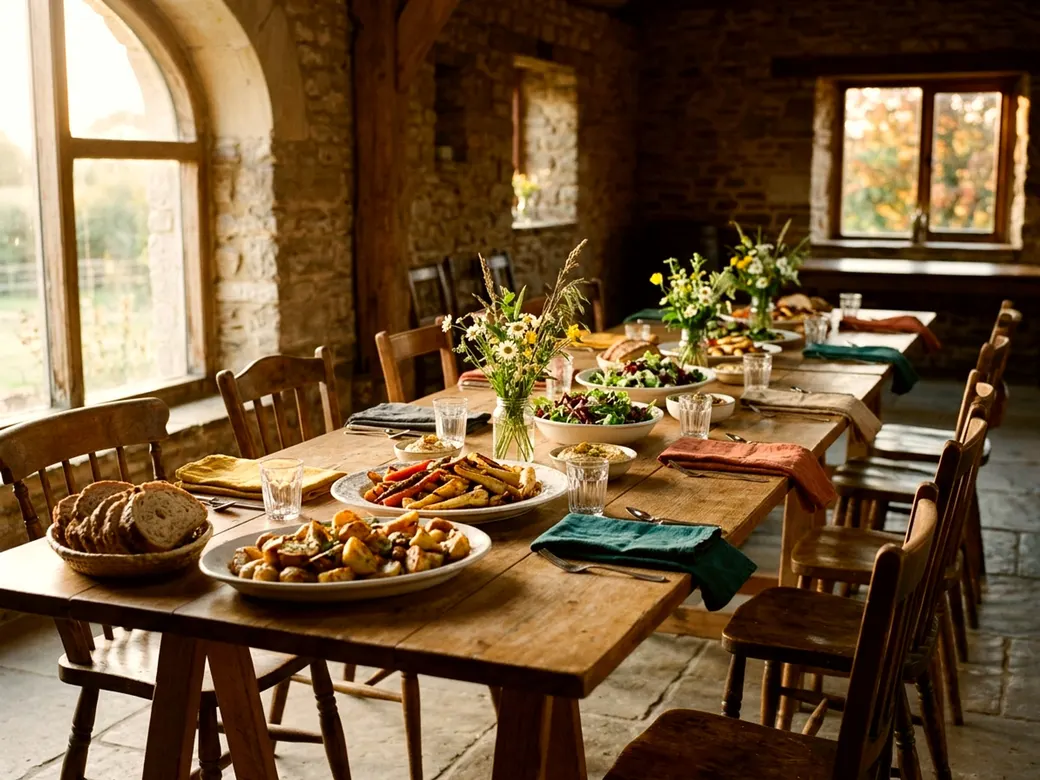
Sharing platters bring the food to the table. Staff set down large bowls of meat, salads and potatoes in the middle for guests to pass around. It makes for a lively, sociable meal. You usually need fewer waiters than for a plated meal, though you may need larger tables to hold the extra dishes.
An afternoon tea menu offers sandwiches, scones and cakes. It requires almost no cooking on site, suiting village halls or marquees with basic kitchen setups. It can keep the cost down and works well for an early afternoon reception. Serving tea and cake early leaves room for a heavier meal from a food van later in the evening.
Street food vans park outside the venue to serve pizzas, tacos or burgers straight to the guests. Ask whether you pay a set fee for the van, a price for each portion or both. Street food works well in the evening, but bear in mind that vans serve a few people at a time. A large wedding party might face a long wait.
What a per head price usually covers and what gets added on
Multiplying a basic quote per head by your guest list does not always give you the final bill. The food itself is only one part of the catering operation. You need to read the itemised quote to see what that per head figure actually buys.
Some prices cover only the ingredients and the chef's time, with the rest as separate line items. Others include the plates, the cutlery, the serving staff and the clearing up. Ask exactly what the number covers, as it is easy to assume the quote includes equipment.
Hire costs often sit outside the food price. If your venue is an empty space, you may need to hire the catering tent, the ovens, the fridges and the tables. You may also pay to hire plates, water glasses and linen napkins. These hire charges add up fast.
Staffing is another common extra. Caterers often charge by the hour for the kitchen team, the waiting staff and a manager to run the room. You usually pay for their time from the moment they arrive to set up until they wash the last glass. Travel costs and late-night transport for the staff might also appear on the final bill.
Where guest numbers quietly drive the cost
Adding ten extra evening guests might seem cheap if they only eat a bacon roll. The hidden costs sit in the daytime invitations. Every extra daytime guest pushes up the final bill in ways you might not expect.
More guests mean more tables. Ten extra people can mean hiring another table, a tablecloth, ten chairs and ten sets of cutlery. Then add another centrepiece, more wine glasses and extra jugs of water. These small additions stretch a tight budget thin.
More guests can also mean more staff. Caterers tend to work to a ratio of waiters to guests, and crossing it can mean paying for another member of staff for the whole shift. A venue might also set a maximum number of guests before you must hire extra toilets or security staff.
A smaller guest list is often the quickest way to drop your total spend. It reduces the hire bill, the staffing requirements and the food quantities all at once. Review your numbers before the invitations go out, because each one you send is a guest to feed.
Check the hygiene rating and how allergens will be handled
Any business cooking for your wedding has food safety and allergen rules to follow. You need to know they take this seriously before you let them feed your guests.
Ask how they will handle allergen information and dietary requirements. They should have a clear system for tracking who needs a gluten-free meal or a nut-free plate. The kitchen must prepare these meals safely and the waiting staff must hand them to the correct guest. A good caterer explains this process without hesitation.
Look up their hygiene rating too. The Food Standards Agency holds food hygiene ratings on behalf of local authorities. In England, Northern Ireland and Wales the hygiene rating runs from 5 down to 0, while Scotland uses a separate pass or improvement required status.
The Food Standards Agency's rating site lets you search a business by name, street, town or postcode. The rating is about hygiene and is not a guide to food quality, so a tasting still matters. A quick search early on lets you check a caterer before you fall in love with their menu.
Questions to ask a caterer before you pay a deposit
Sitting down with a caterer is your chance to test how they operate. A strong menu matters, but their ability to run the service matters more.
If you are looking for a Surrey wedding caterer or a specialist near you, ask them to talk you through their timeline for the day. Find out when they intend to arrive and how long they need to set up. Check whether they clear the tables and take the rubbish away at the end of the night.
Ask about their staffing ratios. You need to know how many waiters they plan to bring for your number of guests. Too few staff can mean slow service and cold food. It helps to have a manager who does not cook, purely to coordinate the plates leaving the kitchen.
Ask whether they offer a tasting session before you sign the contract. Tasting the food gives you a realistic idea of their portion sizes and presentation. Find out if the tasting costs extra or if they take the fee off your final bill once you book.
Find out what happens if the speeches run late. Good caterers build a buffer into their cooking times. They know how to hold a hot meal without ruining it, so ask them to explain their backup plan.
Pin down the payment schedule. Find out exactly when the deposit is due, when the final balance must be paid and the final date for confirming your exact guest numbers. Get these dates in writing.
Trim the menu, not the welcome, if the quote is too high
A quote that breaks the budget does not mean you have to start uninviting people. You can bring the total down by adjusting the food you serve. Keeping the guest list intact while serving a simpler meal usually feels better than cutting friends out.
Dropping a course is a quick fix. Moving from three courses to two can bring the food cost down. Serve a filling main and a dessert, or start with a sharing board and move to a main course. The wedding cake can double as the dessert, which saves paying for a separate pudding.
Swapping expensive meats for cheaper cuts can make a big difference. Slow-cooked beef brisket usually costs less than individual steaks and suits cooking for a crowd. A vegetarian main course can cut the cost further. A well-made vegetable tart feels just as special as a roast.
Evening food is easy to overdo. A heavy evening buffet can go to waste if guests are still full from the wedding breakfast. Trimming the evening portions stops good food going into the bin. Simple options such as a large cheese board work well.
Keep the welcome generous. A cold drink and a friendly face can matter more to guests than an expensive piece of fish. Spend the money on enough staff to keep the day running smoothly.
More to enjoy

Budgeting for a holiday so it is paid off before you go
A stress-free break starts with budgeting for a holiday before you book. Build a money saving plan and pay off your trip before you go.
6 min read

What the money purchase annual allowance is and what triggers it
What the money purchase annual allowance is, which types of pension withdrawals trigger it, and how it affects the amount you can save tax free.
6 min read

6 money saving challenges you can start this month
Six practical money saving challenges you can start this month to build your savings, from simple pantry clear outs to weekend spending freezes.
6 min read