- BCN Magazine
- Saving Money
- How the money jar method helps you save without a spreadsheet
How the money jar method helps you save without a spreadsheet
The money jar savings method helps you sort your spare cash into clear goals without complex spreadsheets, giving you visual proof of your progress.
Story by Corin Hatherleigh
- 7 min read
The money jar savings method splits your spare cash into separate pots, each labelled for a specific goal. It skips the complicated spreadsheets and replaces them with a clear visual way to watch your funds grow. You simply divide your savings on payday and drop them into their designated homes.
How the jar method works and who it fits best
A money jar system is a highly visual way to save. You choose a few clear goals and dedicate a specific container to each one. Whenever you have money to save, you divide it among these containers. The containers can be real glass jars on your kitchen counter, or they can be digital sub-accounts within your main banking app.
Many people find staring at rows of data incredibly off-putting. If trying to set up a budgeting spreadsheet leaves you feeling drained, a jar system replaces complex formulas with the simple human satisfaction of watching a pile grow. You just look at the jar to see if you have reached your target.
This routine suits anyone who likes physical proof of their progress. It is also excellent for a busy household where you want everyone involved. Children can easily understand a glass jar filling up with pound coins for a summer trip. It turns a vague financial concept into a concrete household project.
Choosing the right jars for your household
The secret to a successful jar system is keeping your categories broad and limited. If you try to save for a dozen different things at once, your money spreads too thin and progress slows to a crawl. You might lose motivation before any single jar reaches its target.
Pick three or four main priorities. Sticking to a small handful of goals keeps your attention sharp. A balanced household usually needs a mix of different targets.
- A short-term jar covers upcoming family birthdays or a day trip.
- A medium-term jar builds towards a planned holiday or a large piece of furniture.
- A rainy-day jar waits for sudden household repairs or car trouble.
- A loose change jar gathers small coins for a weekly treat like a coffee.
Your chosen goals should reflect the actual expenses that tend to catch you off guard. If the school run means you constantly need to buy new uniforms and shoes, make a jar for that. You can always review your budgeting categories later and pick a fresh goal when one jar hits its target.
Make sure the labels on your jars are highly specific. A jar labelled with a vague word like savings feels uninspiring. A jar labelled with the name of a seaside town you want to visit feels exciting. You are far more likely to drop a spare note into a clearly defined dream than a boring general fund.
Deciding what to add on payday
Your savings routine starts on payday, but your essentials remain the first priority. Pay your rent or mortgage, settle your council tax, and cover your energy bills. Once you buy groceries and set aside travel money, whatever remains is your spare cash ready to be divided.
You do not need to split your money evenly across every jar. If that seaside holiday is only a few months away, you might put half of your spare cash into the holiday jar while the rest trickles into the others. You decide the split based on what matters most that month.
Consistency matters far more than the size of the deposit, so do not worry if it feels like you are only adding pennies. Starting to save money when there is little left over builds a strong financial habit. Adding a tiny amount to a jar every single month proves your commitment and keeps the momentum going.
Some months will be tighter than others. If an unusually high grocery bill or a sudden trip to the GP shrinks your spare cash, just drop whatever tiny amount you can afford into one jar. You can always catch up when things ease off, keeping the routine alive even on a difficult month.
Deciding between physical glass jars and digital bank pots
You can run this system with physical cash or through digital banking. Both ways work beautifully, but they suit different types of household. You must choose the method that fits your daily habits.
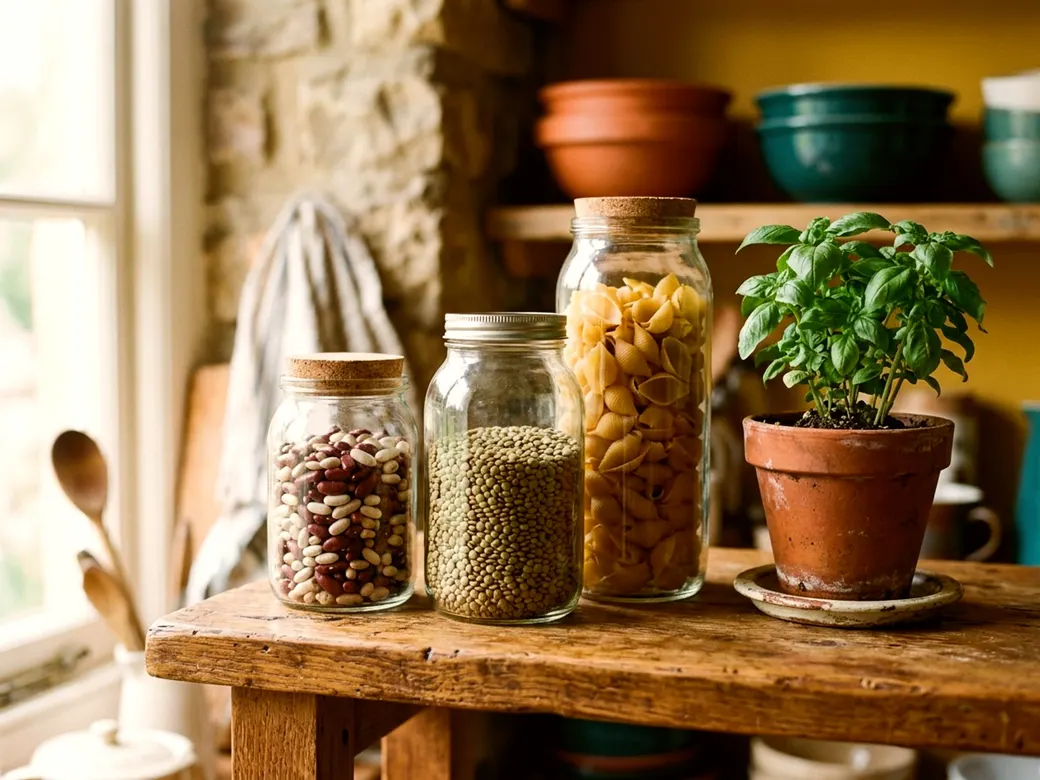
Physical glass jars offer a deeply satisfying experience, letting you hear the coins clinking and see the paper notes piling up. They are perfect for gathering the loose change you find in coat pockets or at the bottom of a bag. A row of jars on a shelf serves as a daily visual reminder of your plans.
If you use physical jars, remove the old jam labels with hot soapy water and tie a fresh card around the rim to show your goal. Place the jars somewhere visible but discreet, like a high kitchen shelf. You want to see them while cooking, but you do not want them displayed to anyone passing a window.
Keeping large amounts of cash at home carries obvious risks. Jars can be knocked over, misplaced, or even stolen. Physical cash also earns nothing while it sits in a jar. Real jars are best kept for smaller, short-term targets.
Digital pots can be a safer, more practical route for serious saving. Some bank accounts let you create separate digital spaces alongside your main balance, so check what yours offers. You can name these digital pots just as you would label a physical jar. Your money is not sitting in a jar at home, and some accounts may pay a little interest, so check the terms of yours.
With digital bank pots, you log into your banking app and set up a new space named after your specific goal. You then set up a standing order to move money across on the morning your wages clear. The downside is that digital money feels invisible, requiring you to actively open an app to see your progress. This lacks the immediate charm of a glass jar on the kitchen table.
What to do when a jar runs dry
No matter how carefully you plan, unexpected costs will eventually drain a jar. The car might fail its MOT, demanding far more than you saved in the repair fund. A kitchen appliance might break beyond repair. When a jar runs dry, you must adjust your plan without feeling like you failed.
Your first move is to pause and look at your other jars. A money jar system is flexible by design, so if the car repair jar is empty, you can borrow from the holiday jar. Moving money between your own goals keeps you out of debt and solves the immediate problem.
Borrowing from yourself can feel disappointing when you watch a hard-earned holiday fund shrink to fix a faulty exhaust. Acknowledge the frustration, but recognise the achievement of paying for a stressful emergency using your own money.
Once the emergency passes, you simply return to your normal payday routine. Direct a little more of your spare cash back toward the goal you borrowed from without trying to aggressively refill the depleted jar. Slowly and steadily, the jar will fill back up.
Keeping the habit alive when the novelty fades
The money jar savings method feels brilliant for the first few months. You enjoy creating the labels, deciding the splits, and watching the funds grow. Then the reality of a long routine sets in. The novelty fades, and making those monthly deposits can start to feel like a chore.
To keep the habit alive, you must celebrate the small milestones like a jar reaching a quarter of its target. Make a cup of tea, sit down, and cross off a marker on a piece of paper. If you use physical jars, drawing a line on the glass provides a visual treat to keep your brain engaged.
Your jars should change with the seasons. A jar for winter fuel bills makes sense in autumn, but you might swap it for a summer holiday fund in spring. Reassessing your jars every few months stops the routine from feeling stale.
Review your labels whenever you feel bored, because a jar often stalls when you no longer care about the goal. If you started saving for a new sofa but suddenly care more about a garden project, empty the sofa jar and rename it. Pouring those funds into the new dream ensures your jars always match your true desires.
Talk about your jars with the people you live with, making the monthly allocation a shared kitchen table activity rather than a solitary task. Ask your family which jar they want to focus on next month so saving money becomes a normal, relaxed conversation.
More to enjoy

Wedding catering on a budget and how per head pricing works
Keep your wedding catering cost within budget by setting your own per head figure, comparing serving styles and checking what each quote leaves out.
7 min read

Budgeting for a holiday so it is paid off before you go
A stress-free break starts with budgeting for a holiday before you book. Build a money-saving plan and pay off your trip before you go.
6 min read

What the money purchase annual allowance is and what triggers it
What the money purchase annual allowance is, which types of pension withdrawals trigger it, and how it affects the amount you can save tax free.
6 min read